A toilet that keeps filling is a small noise, and it is easy to live with for a while.
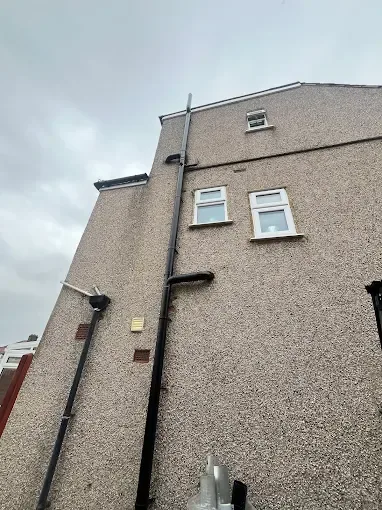
The cistern fills after a flush and it should stop. When it does not, the water has to go somewhere. Into the pan, where you see a constant trickle down the back of the bowl, or out through the overflow, which on an older toilet is a pipe through the outside wall dripping onto the path, and on a newer one runs into the pan as well. Either way the toilet is running all day, and it is on the list of calls our emergency page says cannot wait.
Why it counts
Water that keeps coming does not stay in the cistern.
In a house with one bathroom, a toilet you cannot stop is a toilet you cannot use. On a meter, every litre of it is counted. Behind a panel, where the cistern is concealed, the overflow may not be running into the pan at all but into the wall or the floor, and the first sign is a ceiling below or a neighbour at the door. And a cistern whose valve has stuck fully open can fill past the overflow and over the top, which is how a toilet floods a bathroom while everyone is asleep.
Isolating it
There is usually a small isolating valve on the pipe that feeds the cistern, at the side or behind the toilet, with a slot for a screwdriver or a little lever. A quarter turn closes it. If there is not one, or it will not turn, the stopcock does the same job for the whole house. Then catch what is still coming and leave the flush alone, because flushing a cistern that is already at the overflow only asks it for more.
What usually fails
The lid comes off and we watch a fill. That tells us most of it.
Inside a cistern there are two valves and they fail in different ways. The fill valve lets water in and is meant to shut when the level reaches the float. When it keeps filling, the float has sunk or jammed, the washer or diaphragm inside the valve has worn, scale has built up on the seat so it can no longer close, or the level has simply been set too high, so the water sits above the overflow and runs away all day. The flush valve lets water out of the cistern into the pan when you press the button or pull the handle, and it is meant to seal again afterwards. When its seal has perished or something has caught under it, water runs past it into the pan the whole time and the fill valve keeps topping up behind it, which is the constant trickle down the back of the bowl. Push button flush valves do this more than the old syphon type, and a cistern nobody has had the lid off for ten years will often have both faults at once. So we check where the level settles against the overflow, whether the water is going down the overflow or past the flush seal, whether the float moves freely, and whether the isolating valve works, because if it does not, that goes on the list too.
The parts that go in
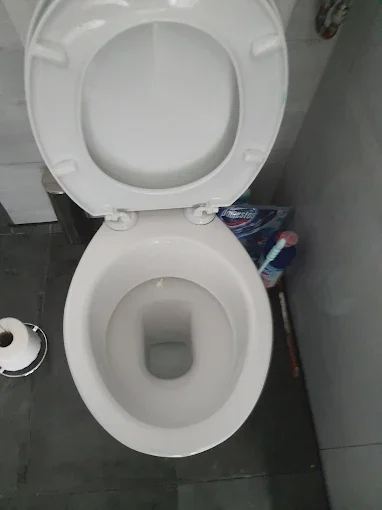
A new fill valve, a new flush valve or syphon, and an isolating valve where there was none or where the old one had seized. Those three parts cure nearly every toilet that will not stop. When the inside of an old cistern is past parts, or the pan and cistern are cracked or the fixings have rotted, the whole toilet comes out and a new one goes in, which is the bathroom side of what we do. The photograph is one we fitted, and the point of it is that a modern close coupled toilet has everything that can fail sitting inside the cistern on top of the pan, where it can be got at with the lid off.
The call
Ring 07546 185778 and say whether the water is going into the pan, out of the overflow, or over the top, and whether you have managed to isolate it. That is enough for us to know what to bring.