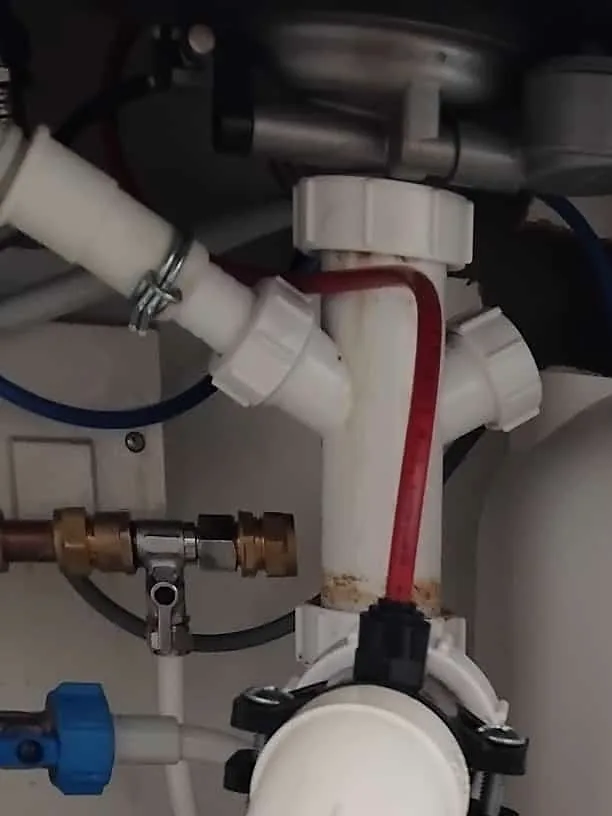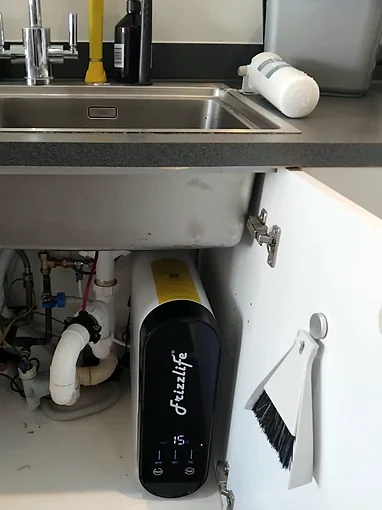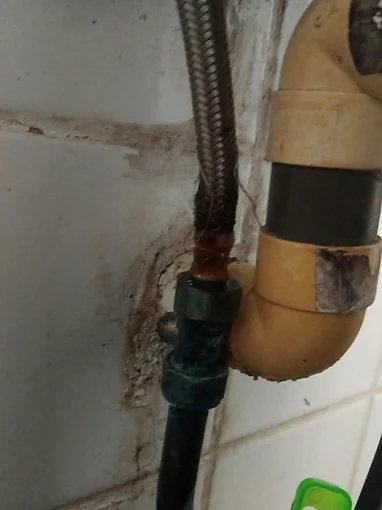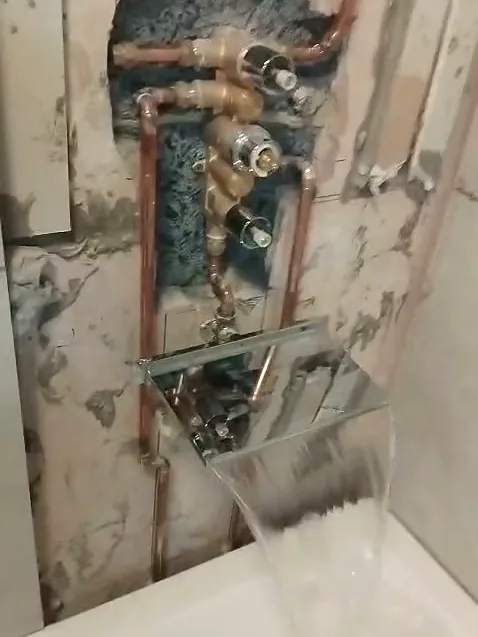
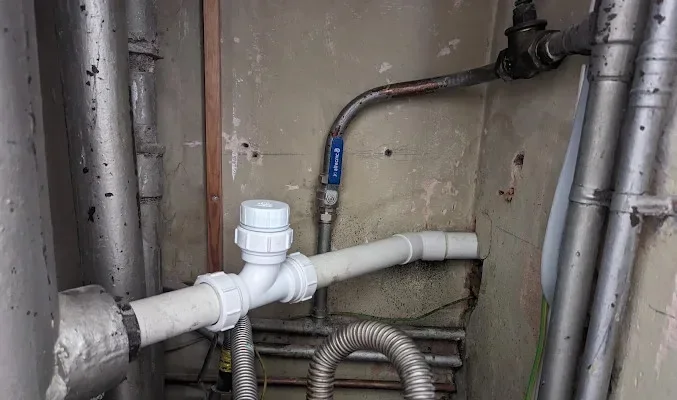
A new run of white plastic waste pipe on a cupboard wall, photographed on one of our jobs.
Why is my waste pipe leaking?
Most leaking waste pipes give way at a joint: a push-fit or compression seal that has dried out, a joint that has pulled apart as the pipe sagged, or a trap that was never done up tight. Less often the pipe itself has cracked. London City Plumbers finds the joint first, then remakes it or replaces that length.
The photograph shows the new pipe crossing the wall with its fittings and a capped end, in front of older grey metal pipes. There is no leak in it. It shows the kind of pipework this post is about.
Waste, not supply
Most of the pipes in a home carry water in. The waste pipes carry it away, out of the sinks, the bath, the shower, the washing machine and the dishwasher, down to the drain.
That difference is the first clue.
Where they give way
A waste pipe is not under pressure. Water only runs through it when something empties, and it runs by gravity, so it needs a steady fall along its whole length. That is why most waste leaks are at a joint rather than in the pipe itself. Push-fit and compression joints hold with a rubber seal, and over the years a seal dries out, shrinks or gets knocked out of line. A joint can also pull apart slowly when a pipe has too few clips and sags under the weight of the water in it, or when boxes are pushed against it at the back of a cupboard. Traps are the other usual place: the nut under a sink or a bath that was never done up tight, or has worked free after being bumped. A crack in the pipe itself is less common, and usually follows a knock, a pipe that was bent to fit, or old pipework that has gone brittle with age. Because the water only runs some of the time, a waste leak can go on quietly for a long while before anyone sees it.
The signs
Water under the sink that only appears after the washing up. A damp patch on the ceiling below a bath or shower that grows after someone has used it.
A smell at the back of a cupboard, or a floor that feels soft in front of a bath panel.
What we do
We run each tap and appliance in turn to see which one makes the leak show, then find the joint. A push-fit or compression joint that has failed is taken apart, given a new seal and remade. A glued joint or a cracked length is cut out and that length replaced. Where the old run has more joints than it needs, or not enough fall, a new run like the one in the photograph is the repair that lasts.
A blocked waste is a different job, and it is in our post on a blocked kitchen sink. Waste pipes and new runs are on our drainage and pipework page.
Ring 07546 185778 and tell us which sink, bath or appliance the water shows up after.