Three photographs, three separate jobs.
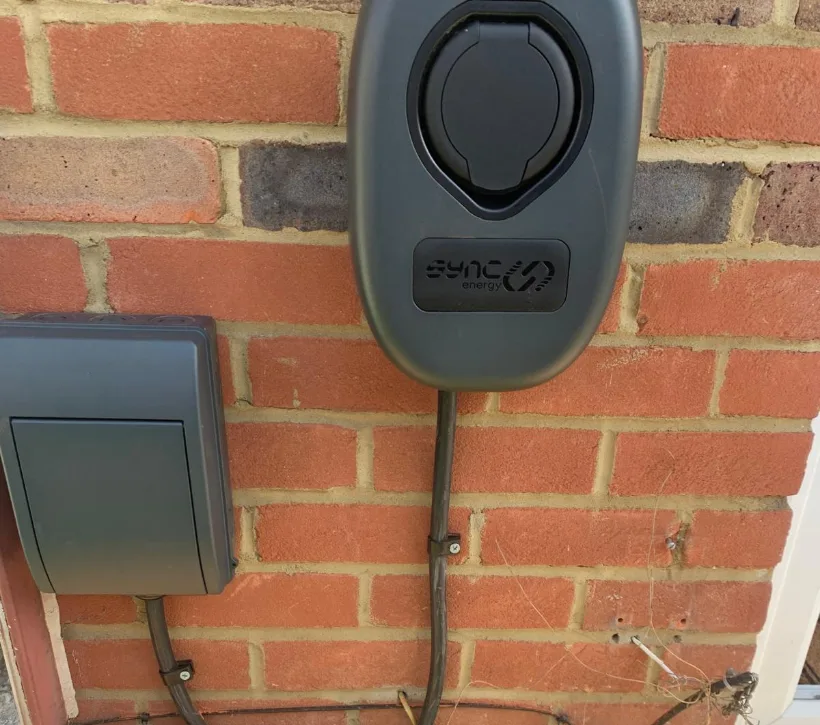
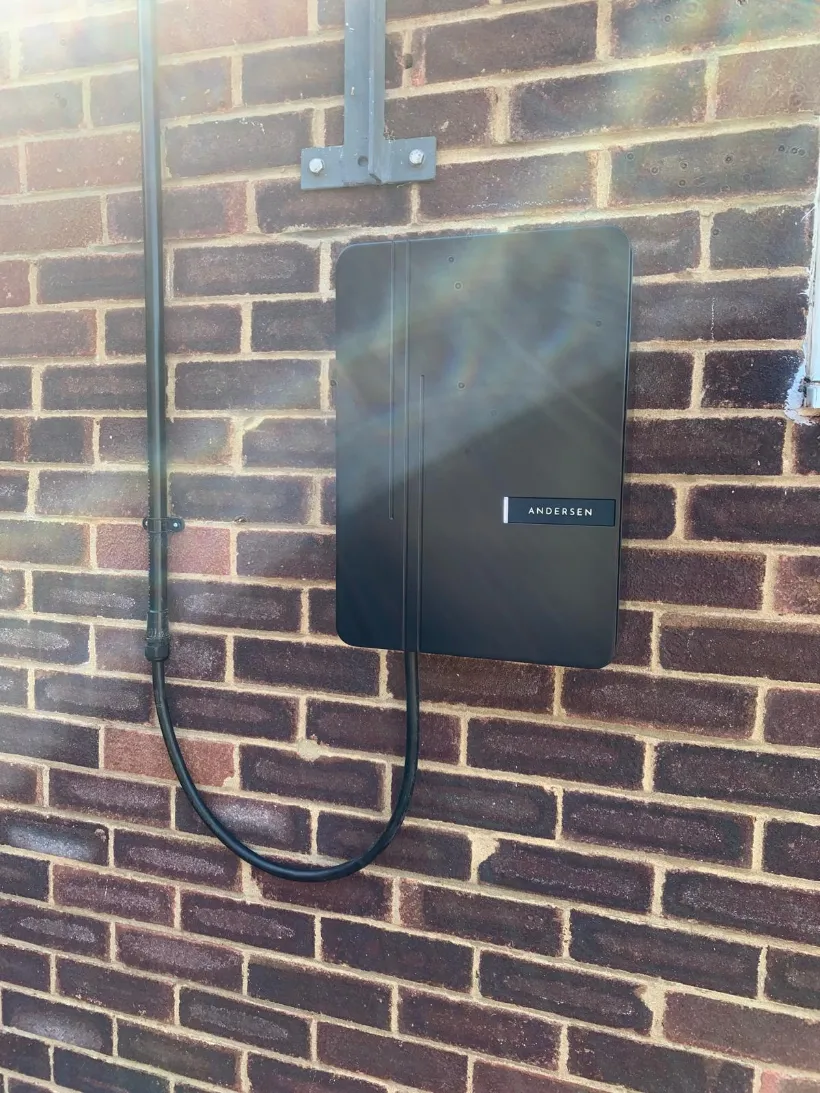
A Sync Energy untethered unit with its own isolator next to it. A Hypervolt tethered unit on a brick pier by a side gate. An Andersen with the cable tucked away underneath. Our electrician fitted all three, and they are together on one page because three makes say something that one photograph cannot: we are not tied to whatever box is already in the van.
The Sync Energy
The Sync Energy went on a red brick wall. It is the untethered type, so the socket is on the front of the unit behind a cap and you bring your own cable to the car. To the left of it is the grey isolator box, which is the switch that lets the charger be turned off outside without anyone going indoors. The supply comes down in armoured cable, clipped to the brickwork in one straight run to ground level. There is an old pipe stub still sticking up out of the ground beside it. It was there when we arrived, it is not ours to remove, and it stays in the picture.
The Hypervolt
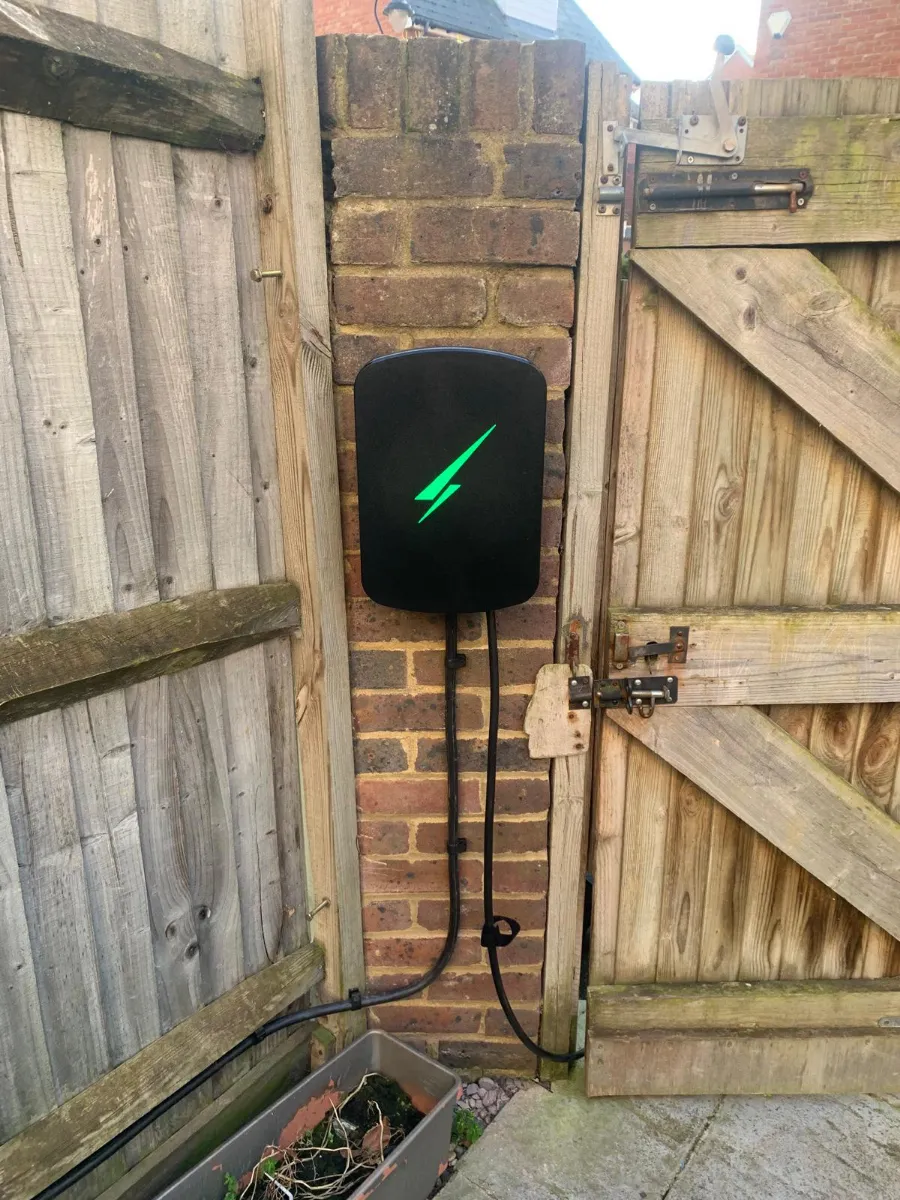
Tethered, so the cable lives on the unit and nobody goes hunting for it.
It went on the brick pier between the fence panel and the side gate, so the car pulls up alongside the gate and the cable reaches it without crossing the path. When we finished, the cable was coiled on the wall and clipped rather than left in a heap, and the light on the front was lit, which is the unit telling you it has power.
The Andersen
The Andersen is the one people choose when they care what the front of the house looks like. It sits flush on the brickwork with a plain dark face and nothing on show but the name plate. The charging cable comes out underneath and loops back up out of the way, and the supply runs up the wall in conduit beside it rather than across the face of the brick. It is the tidiest of the three to look at, and it took the most thought about where everything would go.
The part you never see
The unit on the wall is the last thing to go on and the smallest part of the job. Everything that decides how the job goes has already happened by then. Where the car parks, and which way round it parks, decides whether you want tethered or untethered and which side the socket needs to be on. How far the run is between the consumer unit and the wall decides most of the labour, because getting a cable of the right size through a house cleanly, without it running along a skirting board or through the middle of a kitchen, is where the time goes. What the existing supply and the main fuse can carry decides what can go on the wall at all, and that is something we check on site rather than guess at over the phone. Whether the wall is brick, render or timber decides how the unit is fixed to it. And there has to be somewhere sensible for an isolator, so the whole thing can be switched off outside without anyone going indoors. Three different makes, three different walls, and underneath all of them the same set of questions asked in the same order. That is the job, and the box on the wall is the receipt for it.
Choosing between them
Ring 07546 185778 and tell us where the car parks. That is the whole first conversation.
Anything to do with schemes and paperwork is written down on the EV charger page, including what we will and will not claim about it, and the three photographs on that page are the same three jobs as these.