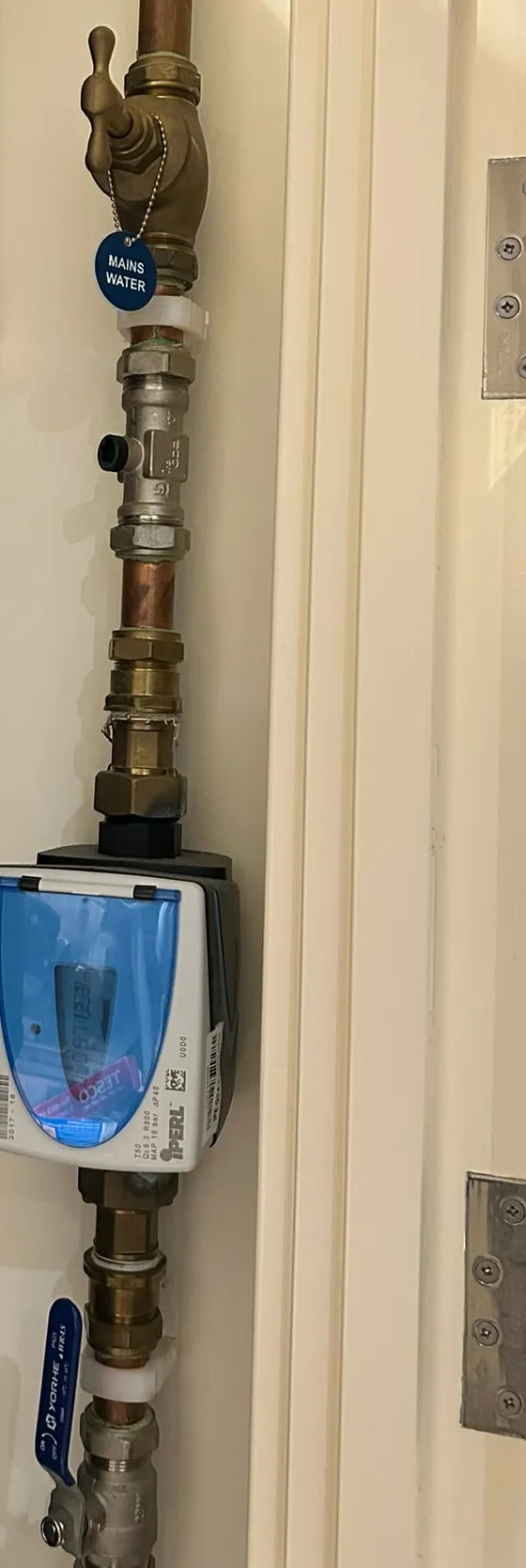
A water meter fitted on the incoming main, in a cupboard.
What does a water meter installation involve?
The incoming main is shut off at the stopcock and drained, a length of pipe comes out, and the meter goes into the gap the right way round for the flow, with a valve either side. The water goes back on, the joints are watched, and the display is checked counting while a tap runs.
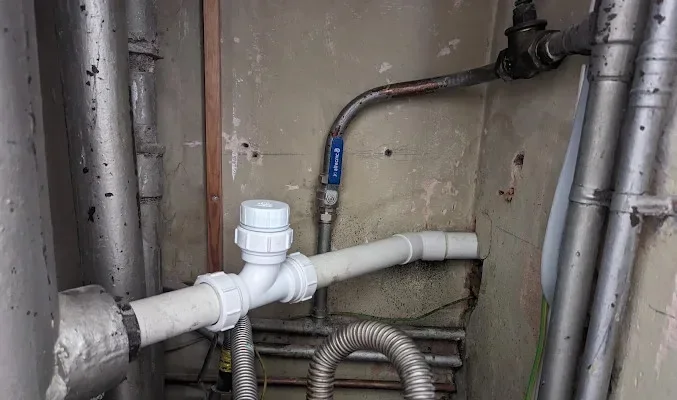
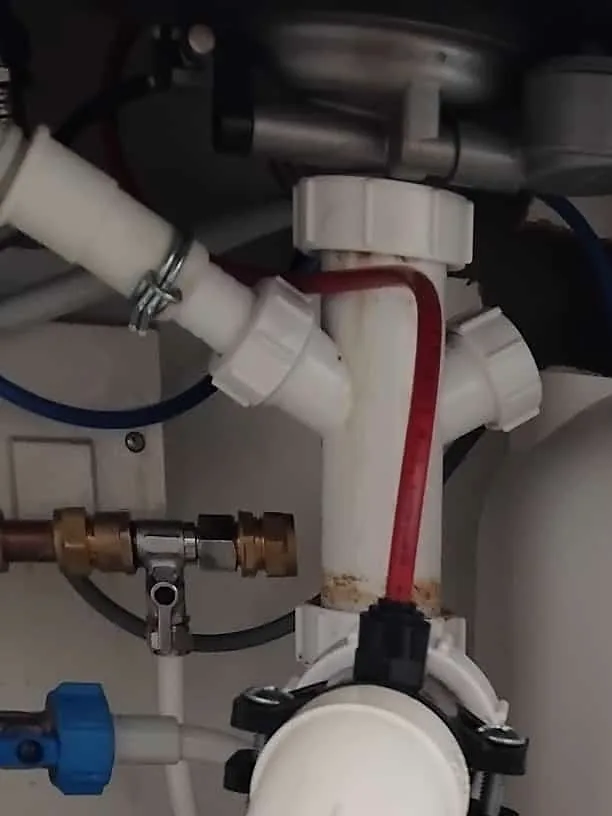
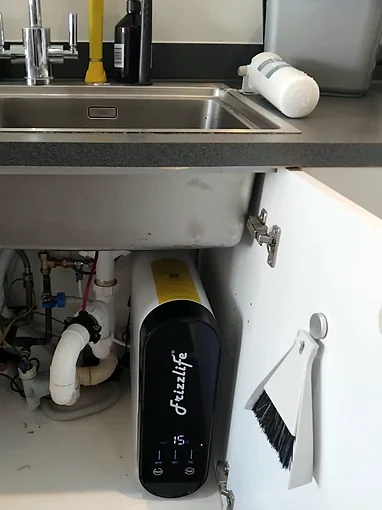
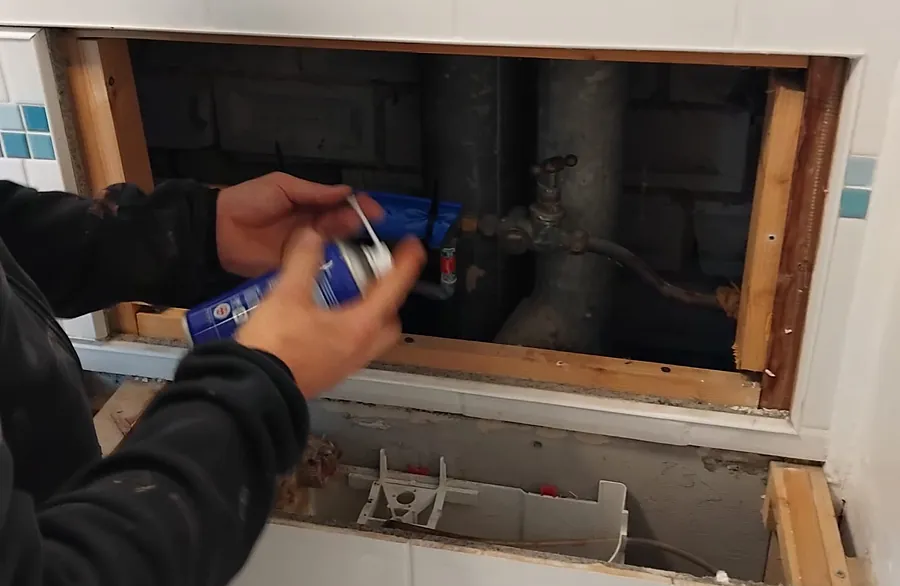
The photograph is the cupboard with its door open. The copper main runs down the wall. Near the top is the brass stopcock with its blue Mains Water tag on a chain, and below it a fitting with a small drain-off on its side. Then the meter itself, upright on the pipe under its blue flip-up cover, and below the meter a lever valve with a blue handle.
A meter on the main
A water meter counts every litre that comes into a home, so it has to sit on the incoming main before any branch goes off to a tap, a cistern or a cylinder. It goes in the right way round, because it reads water moving one way, and it has to be somewhere it can be read without taking a panel off. Fitting one starts at the stopcock. The supply is shut off, the pipe below is drained down through the drain-off, and a section of the main is cut out to make room. The meter goes into the gap with its couplings, the lever valve goes in below it, and every joint is made up before the water goes back on. Then the stopcock is opened slowly, the joints are watched as the pipe fills, and a tap is run somewhere in the house to see the numbers on the display move. A meter that reads nothing with a tap running is in the wrong way round or faulty, and that is found before the cupboard door is shut.
That is a water meter installation, and fitting a water meter inside, in a cupboard, is the same job.
The valves either side
The stopcock above the meter shuts off the whole supply.
The lever valve below it shuts the pipe after the meter, so the meter can come off again one day without the house being drained down. A quarter turn of the blue handle and it is shut.
The drain-off under the stopcock lets the pipe below it empty into a hose or a bucket before any joint is undone.
In the cupboard
A cupboard like this keeps the stopcock, the meter and the valves together on one run of pipe, with the door closed over them and nothing stacked in front.
It also means whoever lives there can find the stopcock in a hurry. On the day a pipe bursts, that matters more than the meter.
The job
A water meter on the main is a small job with a clear order to it: shut, drain, cut, fit, fill and read.
We wrote up a stopcock changed with the pipe frozen before, and our drainage and pipework page covers the rest of the pipes in a home.
Ring 07546 185778 and say where your stopcock is, and send a photograph of it if you can.